
Real Estate Fraud 101: Common Schemes to Watch Out For
At Clear Title Agency of Arizona, it is important to us to provide information that helps inform our customers and the community about the risks associated with real estate fraud. Real estate transactions often involve large sums of money, making them a prime target for fraudsters. Whether you’re a buyer, seller, agent, or title professional, understanding the types of fraud that commonly occur can help you be aware of the increased criminal activity. Here’s an overview of the most prevalent schemes:
1. Wire Fraud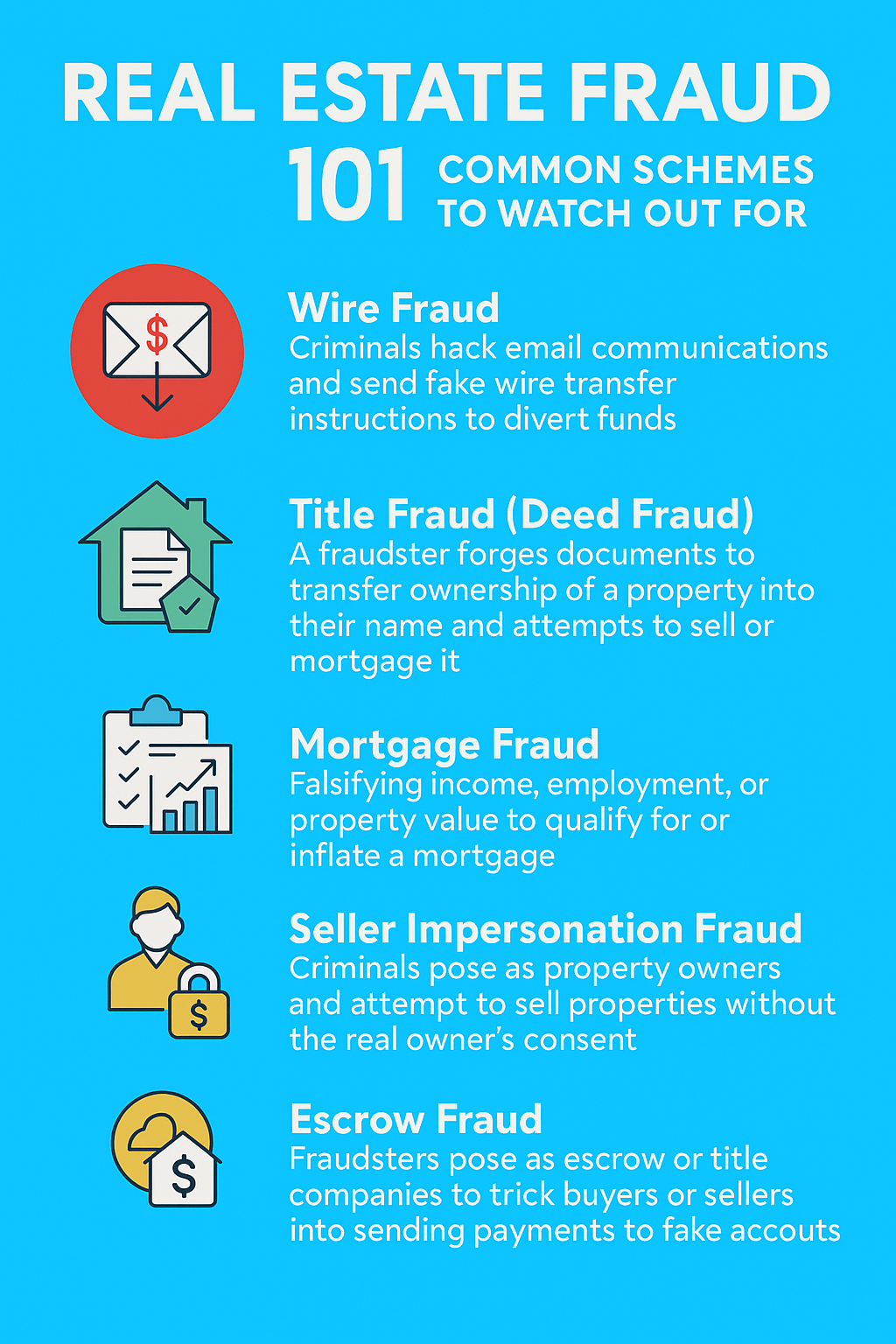
How it happens: Criminals hack into email communications between parties in a transaction (like agents or title companies) and send fake wire transfer instructions to divert funds.
Red flag: A last-minute email asking you to wire funds to a new or unfamiliar account.
Prevention tip: Always verify wire instructions by calling a trusted phone number—not the one in the suspicious email.
2. Title Fraud (Deed Fraud)
How it happens: A fraudster forges documents to transfer ownership of a property into their name, then attempts to sell or mortgage the property without the real owner’s knowledge.
Red flag: Unexpected notices from lenders or county offices about your property.
Prevention tip: Get owner’s title insurance and monitor public records regularly for unauthorized activity.
3. Mortgage Fraud
How it happens: This includes falsifying income, employment, or property value to qualify for or inflate a mortgage. It can be committed by borrowers, appraisers, or industry insiders.
Red flag: Documents or appraisals that don’t match the reality of the property or buyer.
Prevention tip: Work with licensed professionals and validate all documents independently.
4. Seller Impersonation Fraud
How it happens: Criminals pose as property owners—often for vacant or rental properties—and attempt to sell them without the real owner’s consent.
Red flag: A seller who insists on remote or rushed closings and avoids phone or video calls.
Prevention tip: Title companies should require identity verification and conduct deeper due diligence on suspicious transactions.
5. Escrow Fraud
How it happens: Fraudsters pose as legitimate escrow or title companies to trick buyers or sellers into sending payments to fake accounts.
Red flag: Email addresses that look slightly off from known company domains or sudden changes in contact details.
Prevention tip: Confirm the legitimacy of the escrow company before sending money and call using a trusted phone number.
Final Thoughts
Fraud in real estate is increasingly sophisticated. By staying informed, verifying details, and working with reputable professionals, you can protect your property and your investment.